By Mosisa Aga
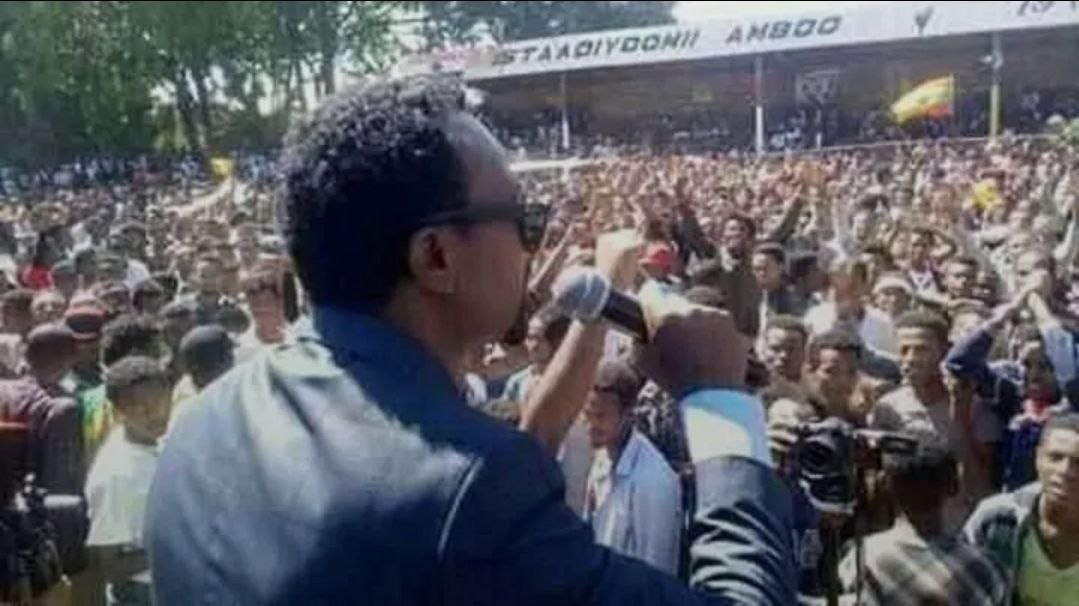
Looking back nearly a decade later, one striking feature of recent Oromo political history is the contrast between developments inside Oromia and those within the Oromo diaspora. While the Qeerroo-led Oromo Protest (2014–2018) brought an unprecedented level of unity, determination, and national consciousness among Oromos on the ground, the diaspora experienced repeated cycles of controversy, division, and bitter public disputes.
Today, many of those divisions continue to shape Oromo political discourse. In recent weeks, one of the most influential and controversial figures in contemporary Oromo politics, Jawar Mohammed, has repeatedly accused the Oromo Liberation Front (OLF) of becoming aligned with the ruling Prosperity Party. He has publicly referred to the OLF as“Bilxiginnaa Gullallee“ (“Prosperity Party in Gullallee”) and has accused several senior OLF leaders of secretly collaborating with the Ethiopian government. These allegations have generated intense debate across Oromo social media. Many of his supporters have accepted them as credible, while many OLF members and supporters have rejected them as unfounded and damaging.
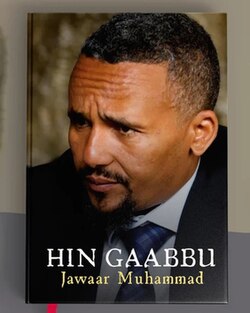
Jawar has used his Facebook page, which now has more than three million followers, as his primary platform to communicate with the public and criticize his political opponents. After the publication of his book Hin Gabbu (I Will Not Regret), he remained relatively quiet for some time. Later, he returned with a series of Facebook posts criticizing Ethiopian government officials, whom he described as members of a “government mafia.” Those posts attracted widespread attention and earned him considerable public support.
More recently, however, Jawar shifted his focus from the government to the OLF leadership. He accused several senior OLF leaders—including Aman File, Yaso Kebebe, Dechasa Wirtu, Gashu Lemessa, and OLF Chairman Daud Ibsa, of secretly working with the Ethiopian government. He also alleged that some of them were connected to political assassinations.
Among the most serious of these allegations were those related to the assassinations of two prominent OLF leaders. On October 25, 2022, Moibon Bekele was assassinated. Less than two years later, on April 10, 2024, Batte Urgessa, another senior OLF leader and outspoken government critic, was also assassinated. Jawar alleged that senior OLF leaders Aman File and Dechasa Wirtu collaborated with what he called the “government mafia” to organize these killings. Both men denied the accusations, stating that they were themselves imprisoned when the assassinations occurred. Jawar, however, maintained that they directed the operations from prison. These competing claims further intensified debate within the Oromo community.
At the same time, Jawar’s critics point to a very different period in his political career. They argue that before his arrest in 2020, he was one of Prime Minister Abiy Ahmed’s strongest public supporters. They cite numerous interviews and public speeches in which he praised the new administration, repeatedly declared that “Oromoon amma bilisoomeera“ (“The Oromo people are now free”), and opposed armed struggle. In one interview on OMN, he stated:
“Even if it is my own brother, any attempt to overthrow this government by force is an attempt to destroy Oromia and Ethiopia. Any attempt to overthrow Abiy Ahmed is an attempt to fail the Oromo people.”
Today, these statements have resurfaced on social media, where critics argue that Jawar once strongly supported the very government he now accuses the OLF of supporting.
In my view, this continuing pattern of internal conflict has become a lose-lose situation for the Oromo struggle for peace, justice, democracy, and freedom. Regardless of one’s political position, such serious accusations deserve careful examination rather than unquestioning acceptance or outright dismissal.
The purpose of this series is not to revisit old controversies for their own sake or to encourage readers to support one side over another. Rather, it is to examine Jawar Mohammed’s political evolution and place today’s debates within their broader historical context. My goal is not to tell readers what to believe, but to present the relevant history and evidence so they can evaluate Jawar’s current claims, the responses to them, and reach their own informed conclusions.
Author’s Note
Before continuing, I would like to briefly explain the perspective from which I write this series.
For more than fifteen years, I have studied, documented, and written about the Oromo Student Movement (OSM) and the Qeerroo movement. The history, origins, and development of these movements have often been interpreted in different ways, particularly regarding Jawar Mohammed’s role. Although I was not a member of Qeerroo myself, I closely followed its development, documented many of its major events, translated its public statements into English, and presented my research at academic and policy forums.
Since 2009, I have published a series of articles on the Oromo Student Movement and the Qeerroo movement, most of them under a pen name on Gadaa.com (now no longer active) and other websites. These writings traced the movement’s development from the widespread student protests of 2005 through the emergence and growth of the organized Qeerroo movement. In addition to my published work, I have presented my research at academic and policy forums, including conferences of the Oromo Studies Association (OSA) and an OLF policy symposium.
On August 21, 2020, while Jawar Mohammed was in prison, I published an article in Ethiopia Insight entitled Qeerroo: A Regimented Organization or a Spontaneous Movement? The article was written in response to a paper by the respected scholar Dr. Terje Østebø, who had argued that Qeerroo was primarily a spontaneous movement centered on Jawar Mohammed. Drawing on documentary evidence and years of research, I argued that the movement originated from the organization of Qeerroo Bilisummaa Oromoo under the OLF and that Jawar himself was not part of that organizational structure. At the same time, I acknowledged Jawar’s important contribution in expanding and energizing the movement through his media influence and public outreach.
After reading my article and reviewing the evidence, Dr. Østebø graciously contacted me and acknowledged that some of the information he had relied on came from inaccurate or uninformed sources. Although scholars may continue to interpret aspects of the movement differently, that exchange reinforced my confidence in the importance of grounding historical discussions in verifiable evidence.
Beyond my published research, I also followed the movement closely and supported it in various ways. I became familiar with many of the discussions and preparations that preceded the formal establishment of Qeerroo in 2011, including the adoption of the name “Qeerroo.” Since then, I have continued to monitor its activities and translate many of its public statements into English.
I mention these experiences not to claim special authority or to exaggerate my role, but simply to explain the perspective from which I write. Like any historical account, this series reflects my understanding of events based on years of observation, research, and documentation. I encourage readers to examine my arguments critically, compare them with other available sources, and reach their own conclusions.
My purpose is not to write a complete history of the Qeerroo movement. Rather, it is to explain the historical events that shaped Jawar Mohammed’s political rise and the controversies that continue to influence Oromo politics today.
The Early Signs of a Divided Diaspora
Between 2014 and 2017, a series of high-profile incidents exposed and deepened divisions within the Oromo diaspora. In November 2014, Dr. Hamza Abdurazak and several senior officials resigned from the Oromo Media Network (OMN), triggering weeks of intense debate. Two years later, the Oromo Leadership Conference (OLC) convened in Atlanta without the participation of the OLF. During the conference, an individual publicly denounced the OLF, and the remarks were later broadcast by OMN, fueling another prolonged public controversy.
In December 2016, former Qeerroo leader Yazew Kebebe survived an alleged assassination attempt. He and his supporters publicly accused members of the OMN team in Cairo of involvement, further widening existing divisions. Around the same period, at the annual Oromo Studies Association (OSA) conference, two respected professors who had resigned from the OMN Board openly criticized the organization’s internal governance, sparking another wave of heated exchanges across Oromo social media.
The pattern continued. Each new controversy generated weeks of accusations, counter-accusations, and public infighting. Although these disputes were concentrated largely within the diaspora, they increasingly influenced political discussions about the broader Oromo national struggle.
As these events unfolded, Jawar Mohammed increasingly became a central figure in many of the controversies that shaped Oromo diaspora politics.
Yet Jawar’s association with controversy did not begin during the Qeerroo movement. It stretched back several years earlier.
In 2009, Jawar published a widely discussed essay entitled The Failed Journey of OLF. In it, he argued that the Oromo Liberation Front had “failed to deliver tangible results,” described its leadership as “irresolute and incompetent,” and concluded that the organization was “damaged beyond repair.”
The article immediately generated intense debate throughout the Oromo diaspora. Members and supporters of the various OLF factions strongly rejected Jawar’s characterization. At the same time, many writers within Ethiopia’s so-called “unity camp” applauded him for criticizing what they viewed as an organization that had previously been beyond public criticism.
Among those who welcomed Jawar’s article was political commentator Messay Kebede. While praising Jawar for exposing what he considered the OLF’s internal weaknesses, Messay argued that Jawar had not gone far enough. In his view, the OLF’s fundamental problem was not its leadership but its commitment to Oromo self-determination. Jawar responded, Messay replied again, and the exchange evolved into a lengthy public debate that drew in numerous other writers from both sides. Online forums, particularly the then-popular Paltalk discussion rooms, were consumed by the controversy for weeks.
The timing of Jawar’s criticism was also significant. The OLF was still struggling to recover from the damaging internal split of 2008. Claims that the organization had failed to produce results had already become a central argument used by breakaway groups to justify their departure. Jawar echoed many of these criticisms, but he presented them in a polished and widely circulated essay that reached a much broader audience.
From my perspective then, and even more so looking back today, the principal weakness of Jawar’s critique was not that it criticized the OLF. Every political organization should remain open to criticism and accountability. Rather, the essay offered no realistic alternative strategy for advancing the Oromo national struggle. Declaring that an organization is “beyond repair” naturally raises an important question: What should replace it?
If a vehicle is declared “beyond repair”, one must have another means of continuing the journey. Likewise, if the OLF was truly beyond saving, what organization, leadership, or political strategy should take its place? Jawar did not provide a clear answer.
Whether he believed new leadership would emerge, anticipated the birth of a new movement, or saw an opportunity to fill a political vacuum is open to interpretation. What is clear is that the article alienated many Oromos while earning him considerable praise from segments of Ethiopia’s “unity camp.” For several years afterward, many of his strongest supporters came from circles that viewed him as someone willing to challenge Oromo nationalism and advocate for a united Ethiopia rather than an independent Oromia.
That early episode, I believe, marks an important starting point for understanding Jawar Mohammed’s subsequent political evolution and the recurring controversies that followed. More importantly, it provides essential context for evaluating his current allegations against the OLF. Readers may agree or disagree with my conclusions. My hope is that this series will encourage people to look carefully at the evidence and think critically instead of becoming more divided.
In Part II, we will examine how Jawar’s relationship with Ethiopia’s “unity camp” changed, how the “Oromo First” campaign emerged, and how the Oromo Media Network (OMN) was born. We also discussed the emergence of Qeerroo Bilisummaa Oromoo and the battle for its leadership. These developments transformed Jawar from a controversial writer into one of the most influential political figures in modern Oromo politics.
https://t.me/hordofaa